


Crypto is excellent at moving money across borders. Spending it is still more complicated than it should be.
You can keep USDT in a wallet, receive payments from clients in another country, and move funds between networks without touching a traditional bank. Then you walk into a café, open an online store, or try to pay for a hotel and discover that the merchant only wants a normal card.
That gap is where crypto-funded cards become useful.
Instead of waiting for every merchant to accept Bitcoin or USDT directly, a crypto card connects digital assets with payment infrastructure people already use. When the card also works with Apple Pay or Google Pay, the experience becomes much closer to using an ordinary bank card.
For travelers, remote workers, freelancers, and people who already keep part of their money in crypto, this can be one of the most practical ways to actually use digital assets.

The Problem With Spending Crypto Directly
Direct crypto payments sound simple until you try to use them in everyday life.
There are merchants that accept Bitcoin, stablecoins, or other cryptocurrencies, but they are still the minority. Most online stores, restaurants, subscription services, airlines, hotels, and local businesses expect a Visa or Mastercard payment.
That leaves crypto users with a familiar process:
crypto → exchange → fiat → bank account → card → purchase
It works, but it defeats some of the convenience of holding digital assets in the first place.
A crypto-funded card shortens the process:
crypto → card → purchase
The merchant does not need to integrate blockchain payments. From their side, they receive a normal card transaction.
This is why a crypto card for global payments can be more useful than trying to find a different crypto-friendly merchant every time you want to spend money.
Apple Pay and Google Pay Change the Experience
A virtual card is already useful for online purchases. You can enter the card number at checkout and use it for subscriptions, SaaS tools, travel bookings, or e-commerce.
But Apple Pay and Google Pay make a virtual card much more interesting.
Once a compatible card is added to your mobile wallet, you no longer need a physical card for many everyday purchases. Your phone becomes the payment method.
The experience is simple:
Fund the card using crypto.
Add the card to Apple Pay or Google Pay.
Use tap-to-pay at compatible terminals.
Pay online wherever the card is accepted.
There is no need for the merchant to understand cryptocurrency. They do not need a special wallet, QR code, or blockchain integration.
For the user, crypto becomes the source of funds while the actual payment feels completely normal.
A Practical Example With USDT
Stablecoins are probably the easiest way to understand why this setup is useful.
Imagine you receive part of your income in USDT. You travel frequently and keep most of that balance in your own crypto wallet.
You arrive in another country and want to pay for coffee, groceries, a taxi, or a restaurant.
One option is to send USDT to an exchange, convert it, withdraw fiat to a bank account, and then use your bank card.
Another is to transfer the amount you plan to spend onto a crypto-funded card and use Apple Pay or Google Pay.
The second route removes several steps.
It is especially convenient for people who already think about their balance in stablecoins. If you need $200 for several days of expenses, you can fund the card with roughly what you expect to spend instead of moving a much larger amount back into the banking system.
Where This Setup Is Useful
The obvious use case is travel, but mobile-wallet crypto cards can be useful in several situations.
Everyday purchases
If a compatible virtual card can be added to Apple Pay or Google Pay, it can be used for contactless purchases wherever the card and mobile wallet are supported.
That makes crypto useful for ordinary expenses rather than only specialized crypto merchants.
Online shopping
For online stores that accept standard card payments but not cryptocurrency, the card acts as the bridge between your crypto balance and the merchant.
AI and software subscriptions
Many popular online tools still do not offer direct crypto checkout. A virtual card can be used for recurring subscriptions where supported, including software, hosting, productivity tools, and AI services.
Travel
Flights, accommodation, transport, and other travel expenses are still heavily dependent on card payments. A crypto-funded card gives travelers another way to access funds without repeatedly converting crypto through a traditional bank.
Freelance and remote income
For someone already receiving USDT or other digital assets from international clients, being able to spend part of those funds directly can simplify the path from getting paid to actually using the money.
An Example: IZIPAY Virtual Card
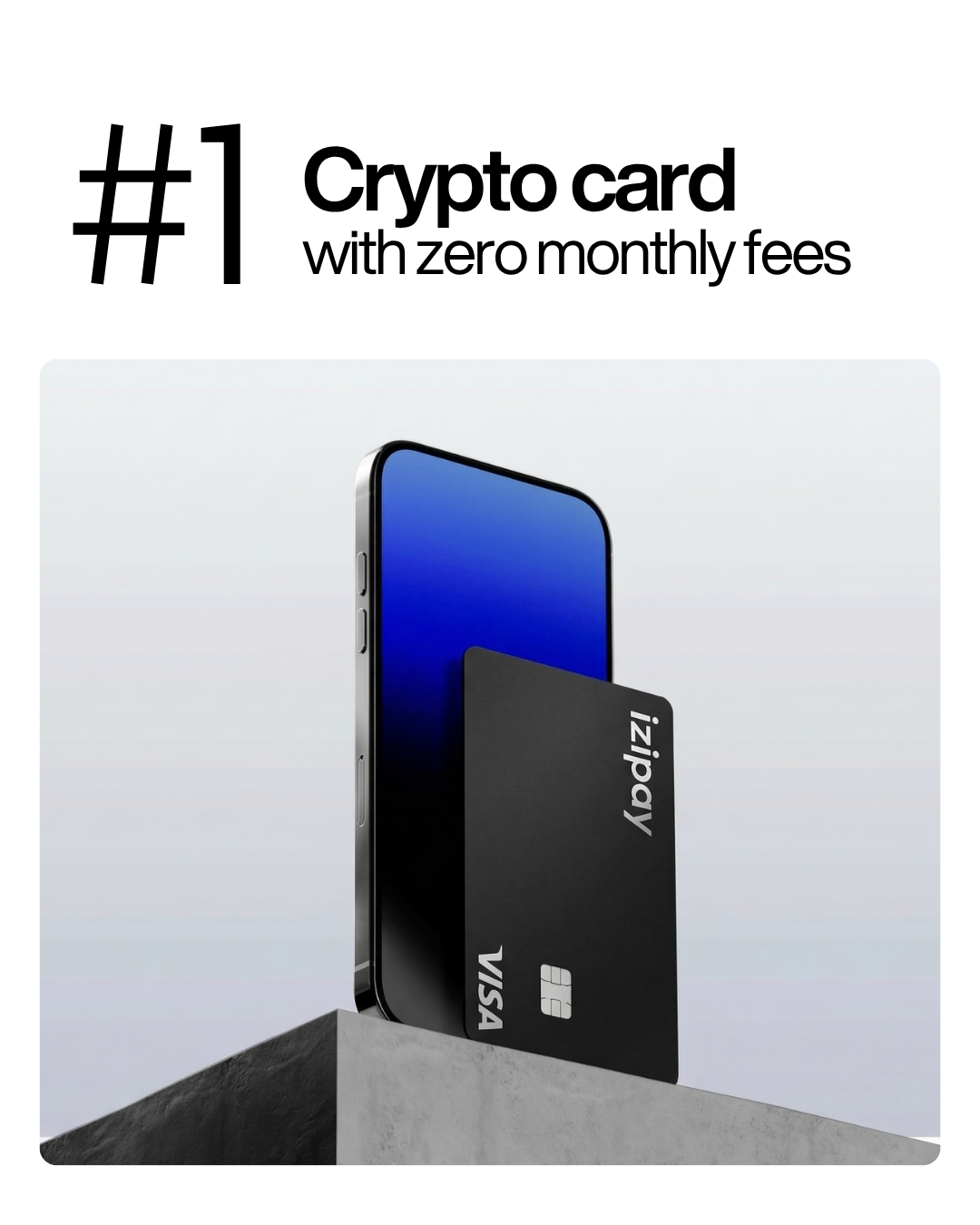
One option in this category is the virtual crypto card with Apple Pay and Google Pay from IZIPAY.
The idea is fairly straightforward: fund the card using supported cryptocurrencies and then use the card through traditional payment infrastructure.
For someone who already holds stablecoins, the interesting part is not really the card itself. It is the ability to move from crypto into ordinary payments without having to cash everything out first.
That makes the card useful as a spending tool rather than a place to store money.
And that distinction matters.
I would not treat a crypto card as a long-term wallet. A better approach is to keep the majority of your crypto in the storage method you already trust and transfer only the amount you expect to spend.
Privacy Is More Than Hiding an IP Address
People interested in proxies often think about privacy primarily in terms of internet traffic.
A proxy can help separate your real IP address from the websites and services you access. It can also be useful for research, testing, managing geographically distributed infrastructure, and other legitimate online workflows.
Financial privacy is a different layer.
Your network connection and your payment method solve different problems, and they should not be confused with each other.
For example, using a proxy does not make a card payment anonymous. Likewise, using a privacy-focused payment product does not hide your network traffic.
A more realistic privacy setup treats each layer separately:
network privacy;
browser privacy;
account security;
payment privacy;
crypto wallet security.
It is also important to follow the rules of the services you use. In particular, payment providers and banks often have strict controls around proxy use, location, and account access. A privacy tool should not be used to misrepresent your identity or location to a financial service.
What to Check Before Choosing a Crypto Card
Not every crypto card works the same way.
Before funding one, I would check five things.
1. Apple Pay and Google Pay compatibility
Do not assume every virtual card can be added to a mobile wallet.
Check the specific card product you are buying, because one provider may offer several different card programs with different capabilities.
2. Total fees
Look beyond the issuance price.
Check:
card issuance fee;
crypto top-up fee;
monthly fee;
foreign exchange costs;
transaction fees;
withdrawal fees, if applicable.
A cheap card can become expensive if every top-up carries a large fee.
3. Spending limits
Someone paying for subscriptions needs very different limits from a business owner or frequent traveler.
Check individual transaction limits as well as daily or monthly restrictions.
4. Merchant acceptance
Virtual and prepaid cards can occasionally be rejected by individual merchants.
I prefer testing a new card with a small purchase before transferring a larger balance.
5. Supported crypto and networks
For stablecoin users, network support matters.
Moving USDT over one network can cost considerably more than another, so check both the cryptocurrencies and blockchain networks supported for funding.
Do You Still Need a Physical Card?
For many people, probably less than before.
If most of your spending happens online and your virtual card works with Apple Pay or Google Pay, your phone covers a surprisingly large portion of everyday payments.
A physical card still has advantages.
It can be useful as a backup when a merchant does not accept mobile wallets, and physical cards may also support ATM withdrawals depending on the provider.
But for someone mainly buying things online and paying at contactless terminals, a virtual card can cover most of the important use cases without waiting for anything to arrive by mail.
The Best Part Is That Merchants Do Not Need to Change
A lot of crypto payment projects start with the same assumption: merchants need to adopt crypto.
That is difficult.
Businesses already have payment terminals, checkout pages, accounting systems, fraud controls, and relationships with payment processors. Asking them to replace that infrastructure just so a relatively small percentage of customers can pay with crypto creates friction.
Crypto cards take the opposite approach.
Instead of changing the merchant, they adapt crypto to the payment infrastructure that already exists.
That is much less revolutionary, but it may be much more useful.
The coffee shop does not care whether the money behind your phone started as dollars, euros, or USDT. It cares that the payment terminal approves the transaction.
A Sensible Way to Use Crypto Cards
The way I think about these cards is simple: they are spending tools, not wallets.
I would keep long-term crypto holdings elsewhere.
When I know I need money for travel, subscriptions, or everyday purchases, I would transfer the amount I expect to spend onto the card.
That reduces exposure if anything goes wrong and makes it easier to understand the real cost of using the service.
It also avoids one of the biggest mistakes people make with fintech products: assuming that convenience means the product should hold their entire balance.
Crypto Spending Is Becoming Less "Crypto"
That may actually be a good thing.
For years, spending cryptocurrency meant finding a merchant with a Bitcoin logo, scanning a QR code, choosing a network, and waiting for confirmation.
A crypto card connected to Apple Pay or Google Pay makes the blockchain side almost invisible at the moment of purchase.
You hold digital assets when that is useful. You move some of them to a card when you want spending power. Then you tap your phone against the same terminal everybody else uses.
No special behavior is required from the merchant.
For travelers and people who already live partly in the crypto economy, that is a much more realistic version of adoption.
Crypto does not necessarily need to replace the payment system people already use.
Sometimes it just needs a good bridge into it.
FAQ
1. Can I use an IZIPAY crypto card with Apple Pay or Google Pay?
Yes. IZIPAY offers card options that support both Apple Pay and Google Pay, allowing users to add the card to a mobile wallet and use it for contactless payments where supported.
2. How do IZIPAY crypto cards work for everyday payments?
You fund the card with supported cryptocurrencies such as USDT, then use it through standard card payment networks. The merchant receives a normal card payment, while IZIPAY handles the crypto-funded side of the transaction.
3. Can I spend USDT around the world with IZIPAY?
IZIPAY can be used for international online and everyday card payments where the card network is accepted. Users can fund the card with crypto and then pay through the card itself or through Apple Pay and Google Pay on compatible devices.
4. Is IZIPAY useful for travel?
Yes. IZIPAY can be useful for travel-related expenses such as hotels, flights, online bookings, subscriptions, shopping, and contactless everyday spending through Apple Pay or Google Pay. As with any card, merchant acceptance can still vary.
5. What should I check before using a crypto card like IZIPAY?
Look at card issuance costs, the 3% top-up fee, spending limits, supported cryptocurrencies, merchant acceptance, and the specific card type you need. For mobile payments, choose an IZIPAY card that supports Apple Pay and Google Pay.